Plasma Fibroblast vs HIFU: Which Skin-Tightening Treatment Is Right for You?

If your concern is skin laxity, jowling or a loss of firmness, you may have encountered both Plasma Fibroblast and HIFU.
They are frequently described as skin-tightening treatments, but they do not work in the same way, target the same tissue depths or involve the same recovery.
The right option depends on your skin, the area being treated, the degree of laxity, your desired outcome and how much visible downtime you can accommodate.
This guide explains the differences honestly—and why, in some treatment plans, the two technologies may complement rather than compete with each other.
WHAT IS PLASMA FIBROBLAST?
Plasma Fibroblast is a surface-based skin-remodelling treatment.
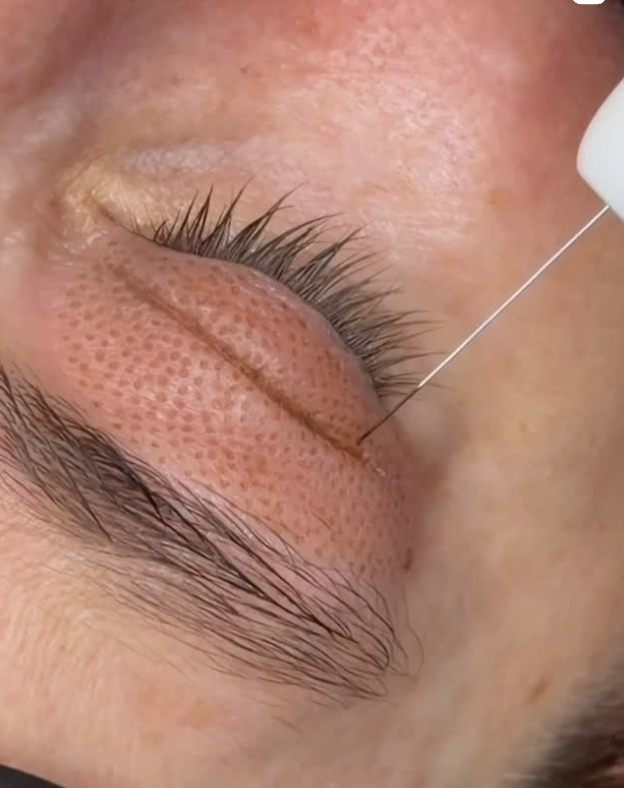
A specialised handheld device creates controlled micro-thermal points across a carefully mapped treatment area. This produces an immediate contraction response while initiating the skin’s natural healing and collagen-remodelling processes.
Plasma Fibroblast may be considered for concerns including:
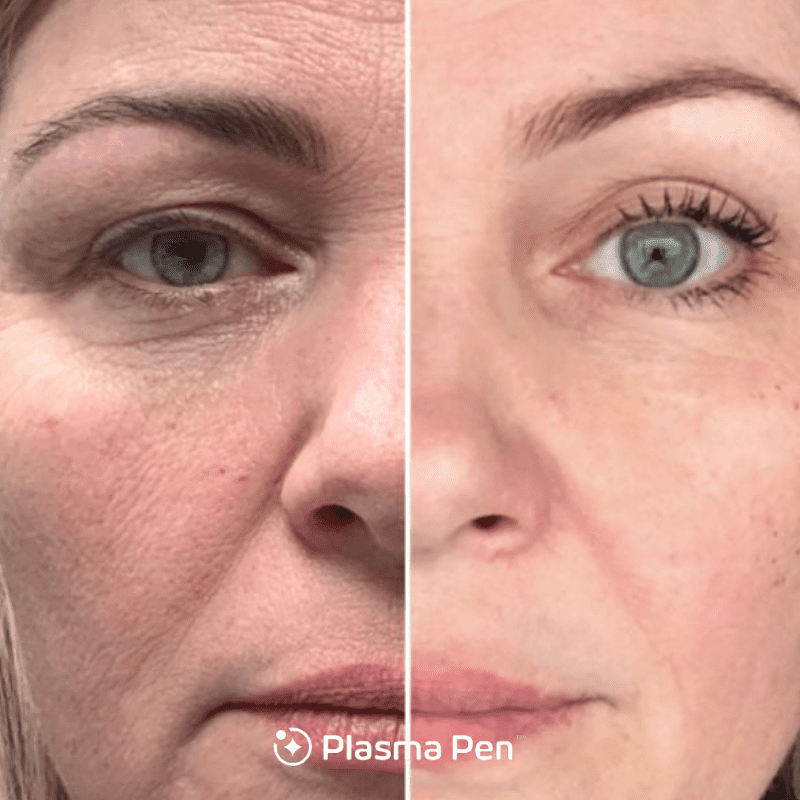
• Upper- and lower-eyelid laxity
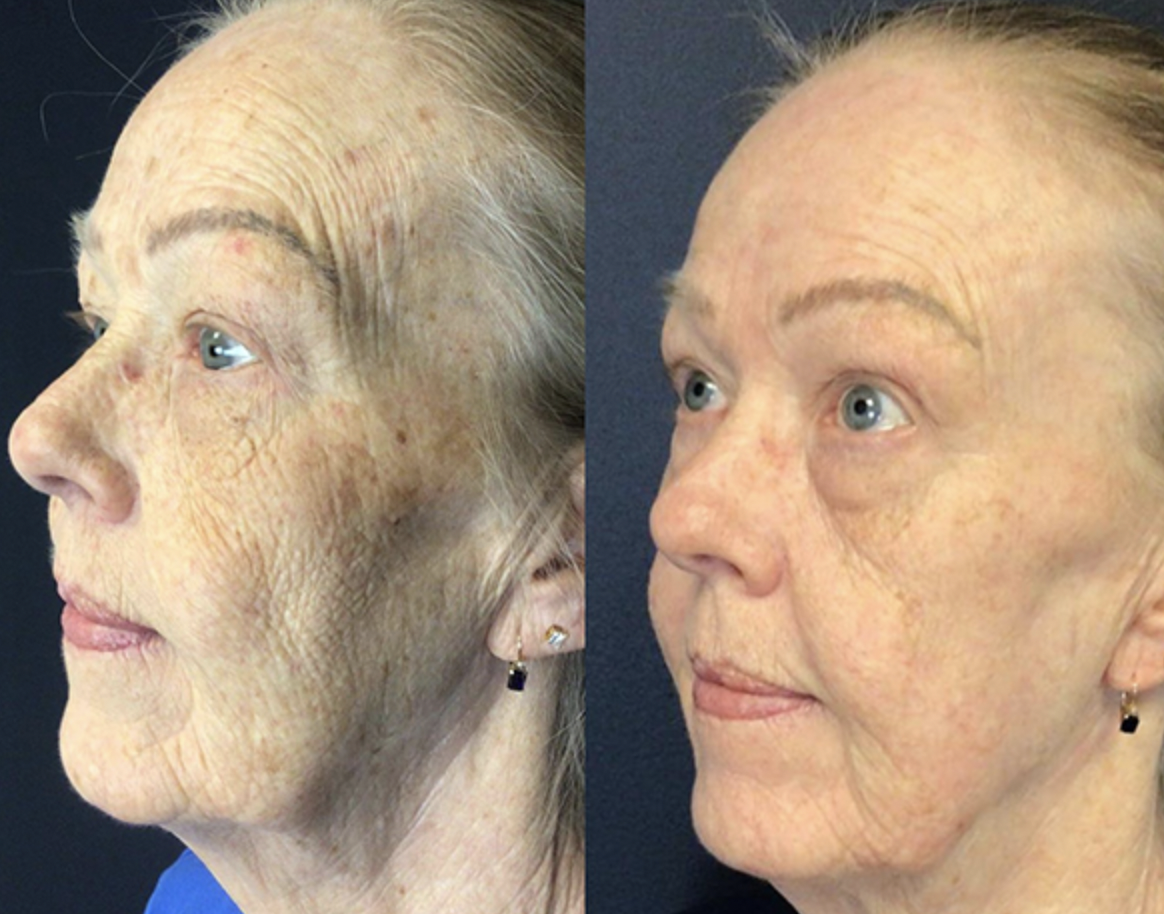
• Fine lines and crepey skin
• Lines around the mouth
• Jowls and lower-face laxity
• Neck creasing
• Selected areas of laxity on the body
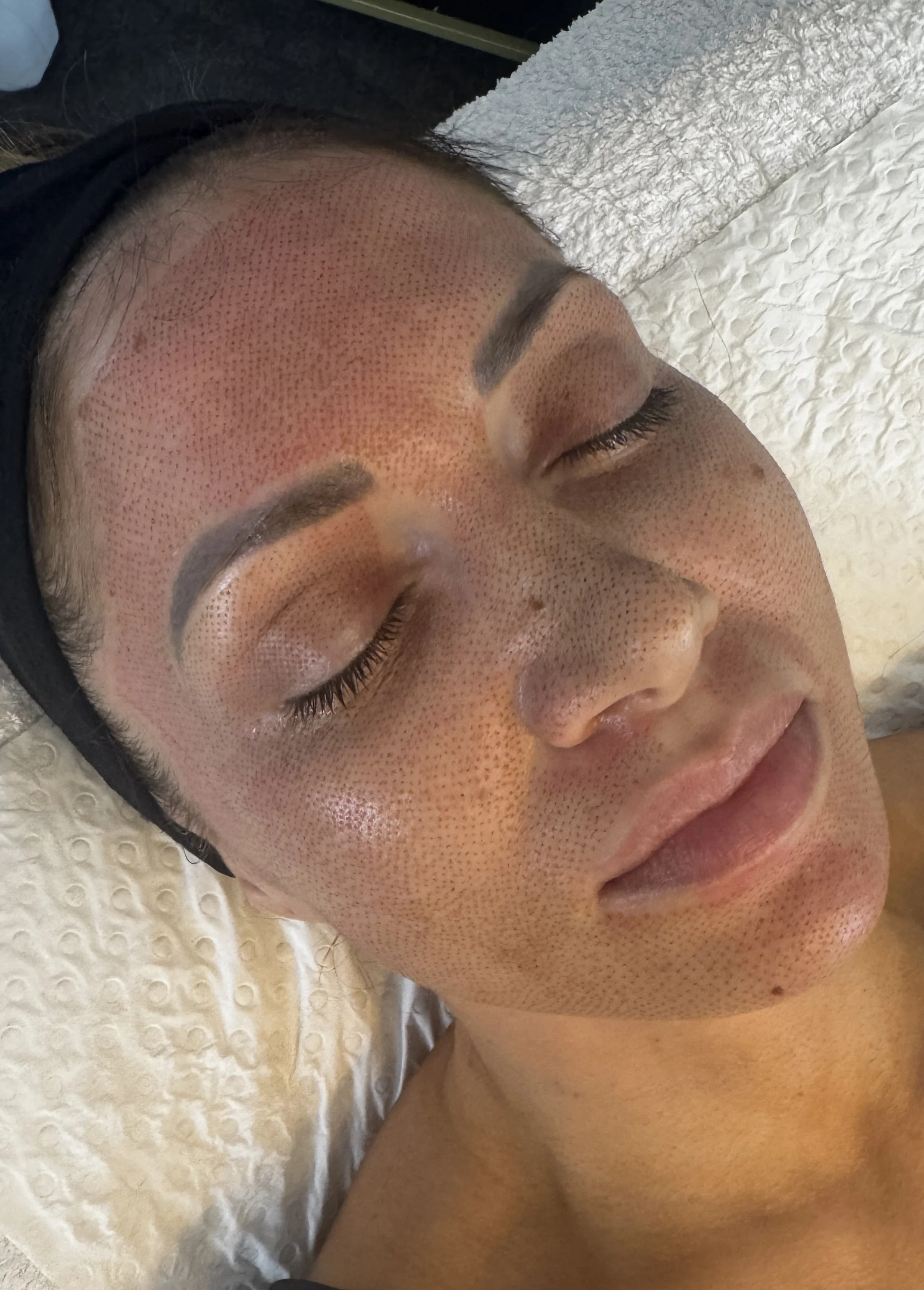
Because the treatment creates visible points on the skin, it involves a distinct healing period.
Small carbon crust dots generally remain visible for approximately 5–10 days—and often 7–10 days around the eyes. Swelling, redness and residual pinkness can also occur.
WHAT IS HIFU?
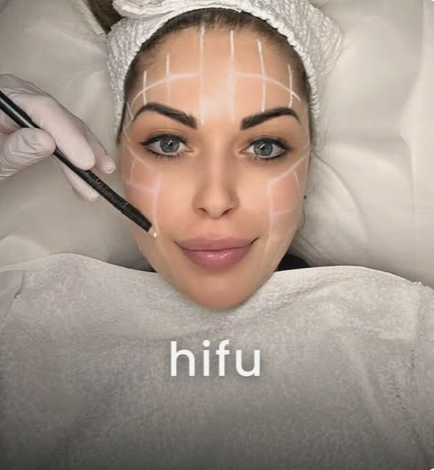
HIFU stands for High-Intensity Focused Ultrasound.
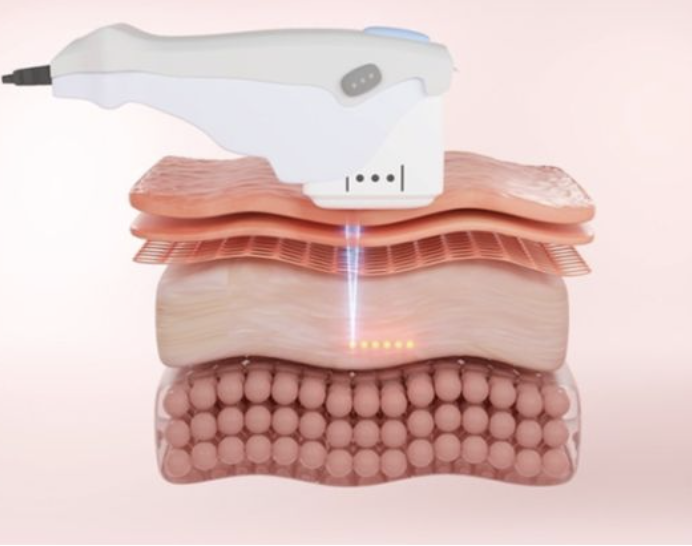
Rather than treating the skin’s surface, HIFU delivers focused ultrasound energy to selected depths beneath the skin. The intention is to create controlled thermal stimulation within deeper tissue while leaving the surface intact.
HIFU is commonly used to support:
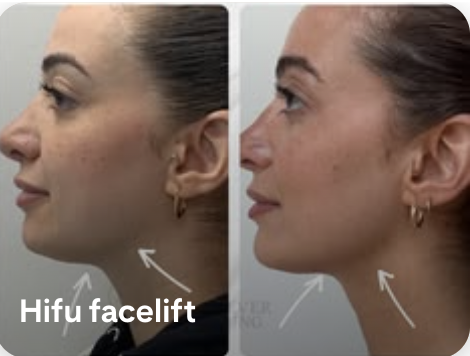
• Jawline definition
• Lower-face firmness
• Jowl improvement
• Neck tightening
• Brow and facial lifting
• Collagen stimulation through deeper tissue layers
• Selected body concerns
Because the surface is not intentionally disrupted, HIFU does not produce the carbon crust dots associated with Plasma Fibroblast.
Some temporary redness, tenderness, tingling or swelling may occur, but there is generally much less visible recovery.

THE MAIN DIFFERENCE: TREATMENT DEPTH
The simplest way to understand these treatments is that Plasma Fibroblast works through controlled treatment at the skin’s surface, while HIFU delivers focused energy into selected deeper layers.
Plasma Fibroblast can be particularly useful where the concern involves visible crepey skin, fine lines or a specific area of surface laxity that can be precisely mapped.
HIFU may be more appropriate where the concern is broader structural laxity, reduced facial support or a softening jawline—particularly when the client wants minimal visible downtime.
Neither depth is automatically better. They address different components of skin ageing.
WHICH TREATMENT MAY PROVIDE MORE VISIBLE TIGHTENING?
This depends entirely on what is creating the concern.
If the issue is localised crepey skin or mild to moderate surface laxity, Plasma Fibroblast may provide a more targeted response.
If the issue involves deeper laxity through the lower face, jawline or neck, HIFU may be the more logical starting point.
Neither treatment replaces surgery or restores lost facial volume. Significant excess skin, prominent fat pads, advanced tissue descent or functional concerns may require assessment by an appropriately qualified medical professional.
A consultation is essential because what appears to be “loose skin” may involve several factors, including skin quality, volume loss, fat distribution and changes within deeper facial structures.
HOW DOES THE DOWNTIME COMPARE?
This is one of the greatest differences between the two treatments.
PLASMA FIBROBLAST RECOVERY
Plasma Fibroblast involves visible healing.
Immediately after treatment, the area may feel warm, tight or tender. Swelling can occur and is often more noticeable around the eyes during the first 2–3 days.
The small carbon crust dots must remain clean, dry and undisturbed until they shed naturally. Pinkness may remain after the dots have released, and careful sun protection is essential throughout recovery.
Clients must be willing and able to follow their personalised aftercare instructions.
HIFU RECOVERY
HIFU generally involves little visible downtime because the surface of the skin remains intact.
Some clients experience temporary redness, tenderness, mild swelling or sensitivity. The treated area may feel tender when touched for several days.
Responses vary, but most clients can return to their usual routine quickly.
WHEN DO RESULTS DEVELOP?
Neither treatment should be judged immediately.
Plasma Fibroblast creates an early contraction response, but the skin continues to heal and remodel over the following weeks. Results are generally assessed at approximately 6–12 weeks.
HIFU results also develop progressively as the tissue responds to treatment. Some early change may be noticed, but improvement in firmness and definition generally becomes more apparent over the following weeks and months.
Both treatments rely on the individual body’s response. Age, skin quality, lifestyle, degree of laxity and general health can all influence the outcome.
WHO MAY SUIT PLASMA FIBROBLAST?
Plasma Fibroblast may be considered for someone who:
• Has a specific area of mild to moderate surface laxity
• Is concerned by crepey skin or etched lines
• Wants precise treatment around areas such as the eyes or mouth
• Understands that results vary
• Can accommodate visible healing and downtime
• Will follow the complete aftercare protocol
• Has been assessed as an appropriate skin type for treatment
Plasma Fibroblast is not suitable for every skin tone or medical history. Pigmentation risk requires careful consideration, and some clients will be advised against treatment.
WHO MAY SUIT HIFU?
HIFU may be considered for someone who:
• Has mild to moderate facial or neck laxity
• Wants support through the lower face and jawline
• Prefers little visible downtime
• Is comfortable with gradual rather than immediate results
• Wants a non-surgical treatment working at selected deeper levels
• Has realistic expectations about the degree of improvement possible
HIFU is not automatically suitable for every face. Facial structure, tissue thickness, volume loss and treatment history must all be considered before proceeding.
CAN PLASMA FIBROBLAST AND HIFU BE COMBINED?
Yes—when appropriate, the two technologies may form part of a layered treatment plan because they address different tissue depths.
For example, HIFU may be used to support deeper facial structure and jawline firmness, while Plasma Fibroblast may be considered separately for more localised surface laxity or crepey skin.
However, combining treatments does not necessarily mean performing everything at once.
The sequence and timing should be determined according to the treatment area, skin response, healing requirements and individual goals. More treatment is not automatically better; a well-designed plan is more important than using the greatest number of devices.
At HITECH SKIN, other technologies such as Jet Plasma, Dotless Plasma, Procell Microchanneling or custom laser treatments may also be considered when skin quality, texture or pigmentation forms part of the concern.
WHY CONSULTATION MATTERS
Choosing between Plasma Fibroblast and HIFU cannot be done reliably from a treatment name or social-media photograph.
At HITECH SKIN in Armadale, Linda assesses:
• The location and degree of laxity
• Skin quality and thickness
• Pigmentation risk
• Facial volume and structure
• Medical history and previous treatments
• Desired outcome
• Available downtime
• Ability to follow aftercare
You may be suited to Plasma Fibroblast, HIFU, a staged combination or an entirely different treatment pathway.
If a non-surgical treatment is unlikely to provide a worthwhile result, that should be explained honestly before you invest your time or money.
SO, WHICH ONE IS BETTER?
Neither Plasma Fibroblast nor HIFU is universally better.
Plasma Fibroblast may be better suited to precisely mapped areas of surface laxity and crepey skin when the client can accommodate visible recovery.
HIFU may be better suited to deeper facial and neck support when minimal surface downtime is a priority.
For some clients, the best result may come from treating different concerns at different depths over a carefully planned period.
The goal is not to select the most powerful-sounding technology. It is to select the most appropriate treatment for your individual skin.
BOOK YOUR SKIN RESET CONSULTATION
If you are deciding between Plasma Fibroblast, HIFU or another skin-tightening treatment, begin with an individual consultation at HITECH SKIN in Armadale, Melbourne.
Your consultation includes a detailed skin assessment, a discussion of your concerns and a personalised treatment recommendation.
The $100 consultation fee is redeemable against your recommended treatment.
Book your consultation:
https://Appointmenttypes.as.me/Consultations
This article provides general information only and does not replace individual medical advice.