How Long Do Plasma Fibroblast Results Last? An Honest Guide
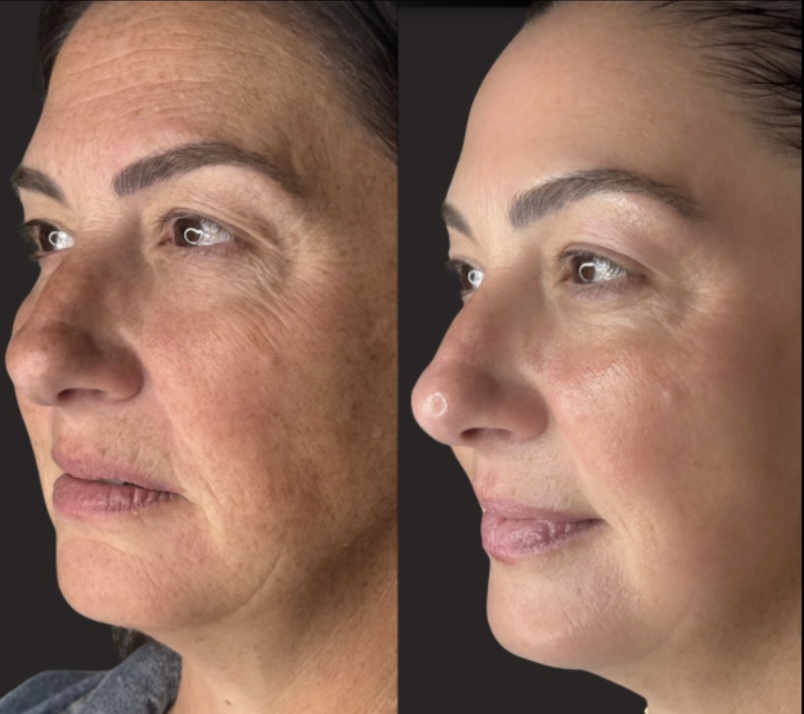
The honest answer is that Plasma Fibroblast results can be long-lasting, but no responsible practitioner can promise an exact number of years.
The treatment creates a controlled healing response designed to tighten existing skin and stimulate progressive collagen remodelling. Once that remodelling has occurred, the improvement does not suddenly disappear. However, your skin will continue to age naturally, and the longevity of your result will depend on your skin quality, lifestyle, treatment area and individual response.
HOW SOON WILL I SEE RESULTS?
Some tightening may be visible shortly after treatment, although early swelling can temporarily exaggerate the initial change.
The more meaningful result develops gradually as the skin heals and collagen remodelling progresses. This generally occurs over approximately 6–12 weeks, which is why results should not be judged too early.
At HITECH SKIN, progress photographs are particularly useful at around the 12-week point. Changes can be subtle when you see your face every day, but far more apparent when photographs are compared under similar lighting and positioning.
HOW LONG DO PLASMA FIBROBLAST RESULTS LAST?
You may see claims that Plasma Fibroblast results last two or three years. While some clients may retain visible improvement for that length of time—or longer—it should never be presented as a guarantee.
There is limited strong clinical evidence establishing one precise duration that applies to every person, treatment area and plasma device.
A more accurate way to understand longevity is this:
The treatment may create a genuine improvement in the skin, but it cannot stop the ageing process that continues afterwards.
The treated skin does not simply return to its original appearance on a particular date. Instead, natural ageing, sun exposure, changes in collagen and other lifestyle factors gradually continue around the result.
WHAT AFFECTS THE LONGEVITY OF YOUR RESULT?
Several factors can influence how long an improvement remains visible:
• Your age and natural collagen production
• The degree of skin laxity before treatment
• The thickness and overall quality of the skin
• The area being treated
• Sun exposure and the consistent use of sun protection
• Smoking or vaping
• Hormonal changes
• General health and healing response
• Significant weight loss or weight fluctuation
• Treatment technique and intensity
• Following the prescribed aftercare correctly
• Your ongoing skincare and treatment plan
Someone with mild to moderate laxity and relatively strong skin may experience a different outcome from someone with advanced laxity, significant sun damage or very thin tissue.
DO RESULTS SUDDENLY WEAR OFF?
No. Plasma Fibroblast is not comparable to a product that is metabolised by the body and stops working after a set number of months.
The collagen remodelling achieved through treatment becomes part of the skin. What continues is the normal biological ageing process.
This means you may continue to look better than you would have without treatment, even while gradual changes in the skin occur over time.
WILL I NEED MORE THAN ONE TREATMENT?
Possibly—but not automatically.
Some clients achieve a worthwhile improvement following one carefully planned treatment. Others may benefit from an additional session because of the degree of laxity, the treatment area or the outcome they hope to achieve.
More treatment is not always better. The skin must be given sufficient time to heal and remodel before another procedure is considered.
At HITECH SKIN, the result is reviewed once the healing and collagen-remodelling period has progressed. Any further treatment should be based on the condition of your skin and the remaining concern—not on an automatic treatment schedule.
IS AN ANNUAL MAINTENANCE TREATMENT NECESSARY?
Not necessarily.
Some clients may eventually choose a maintenance treatment, while others remain happy with their result for considerably longer. The appropriate timing varies and should be determined through reassessment.
Scheduling treatment every year simply because twelve months have passed may not be appropriate for every skin.
HOW CAN I HELP MY RESULTS LAST?
The same habits that protect your skin generally will also help support your Plasma Fibroblast result:
• Use broad-spectrum sunscreen consistently
• Avoid deliberate tanning and excessive UV exposure
• Follow your personalised skincare recommendations
• Avoid smoking
• Maintain a reasonably stable weight
• Support your general health and nutrition
• Avoid unnecessarily aggressive treatments during recovery
• Attend recommended reviews and follow-up care
No cream can reproduce the effect of Plasma Fibroblast, but good skincare and sun protection can help preserve the quality of the treated skin.
WHEN MAY RESULTS BE MORE LIMITED?
Plasma Fibroblast works with your existing tissue. It cannot create the same degree of change as surgical removal of excess skin.
Results may be more limited where there is:
• Significant or heavy skin laxity
• Considerable excess tissue
• Poor skin quality or advanced sun damage
• Volume loss requiring a different treatment approach
• Expectations more consistent with surgery
• A medical or skin condition affecting healing
It also cannot prevent future ageing, restore lost facial volume or guarantee a particular cosmetic outcome.
Careful assessment is essential because the most important question is not simply how long the treatment lasts—it is whether Plasma Fibroblast is the appropriate treatment for your concern in the first place.
A NOTE ABOUT SKIN SUITABILITY
Plasma Fibroblast is not suitable for every skin type.
Because the treatment intentionally creates controlled thermal points, there is a risk of prolonged redness, post-inflammatory pigmentation and other complications when the skin is unsuitable or aftercare is not followed correctly.
At HITECH SKIN, Fitzpatrick skin types V and VI are not treated with Plasma Fibroblast because of the increased pigmentation risk. Medical history, medications, healing history, lifestyle and the proposed treatment area are also assessed before proceeding.
WHAT RECOVERY SHOULD I EXPECT?
Most clients experience redness, warmth, tightness and swelling immediately following treatment.
Swelling can be more noticeable around the eyes and commonly peaks during the first two to three days. The small carbon crusts generally remain visible for approximately five to ten days, with the eye area sometimes requiring seven to ten days.
Pinkness may remain for two to three weeks or longer in some clients. The crusts must be allowed to shed naturally, and careful sun protection is essential throughout recovery.
Healing time and result longevity are different things. The surface may appear healed well before the deeper remodelling process is complete.
THE HONEST BOTTOM LINE
Plasma Fibroblast can create a lasting improvement in appropriately selected skin, but it should not be sold with a guaranteed expiry date or an unrealistic promise.
Results develop gradually, vary between individuals and continue to exist alongside the natural ageing process. Good assessment, conservative treatment planning, correct aftercare and realistic expectations are far more important than claiming that every result will last a specific number of years.
At HITECH SKIN, every treatment begins with an individual assessment so you can understand what Plasma Fibroblast may realistically achieve for your skin—and whether another pathway may be more appropriate.
BOOK A PLASMA FIBROBLAST CONSULTATION
If you are considering Plasma Fibroblast and would like an honest assessment of your skin, book a $100 Skin Reset consultation with Linda Downes.
Your consultation fee is redeemable toward treatment, and you will receive a personalised recommendation based on your skin quality, degree of laxity, medical history, recovery considerations and desired outcome.
General information only. This article does not replace personalised medical advice. Individual suitability, recovery and results vary.