Non-Surgical Eye Lift Melbourne: Plasma Fibroblast vs Blepharoplasty
The eye area is often one of the first places to show skin laxity, creasing and a heavier appearance. It is also where treatment choice matters enormously.
Plasma Fibroblast and surgical blepharoplasty are sometimes spoken about as though they achieve the same result. They do not.
Both may improve the appearance of the eye area, but they work differently, suit different concerns and involve very different levels of intervention. This guide explains the distinction honestly, so you can understand which pathway may be more appropriate for you.
WHAT IS PLASMA FIBROBLAST AROUND THE EYES?
Plasma Fibroblast is a non-surgical skin-remodelling treatment.
A specialised handheld device creates controlled micro-thermal points across the skin’s surface. These points produce an immediate contraction response and initiate the skin’s natural healing and collagen-remodelling process.
Around the eyes, treatment may be carefully mapped across areas including:
• Upper-eyelid skin
• Lower-eye crepey skin
• Crow’s feet
• Fine lines surrounding the eyes
• Mild skin laxity beneath the brow
The aim is to create a gradual improvement in firmness and texture without surgically removing skin.
WHAT IS SURGICAL BLEPHAROPLASTY?
Blepharoplasty is an operation performed by a qualified medical specialist.
Depending on the individual concern, surgery may remove excess eyelid skin and address underlying fat or tissue. It can therefore produce a more substantial structural change than a non-surgical skin-remodelling treatment.
Surgery may be the more appropriate pathway where there is:
• Significant excess or overhanging eyelid skin
• Prominent lower-eye bags or fat pads
• More advanced tissue laxity
• Eyelid heaviness affecting vision
• A desire for a larger or more dramatic correction
Plasma Fibroblast cannot remove or reposition deeper tissue, and it should never be presented as identical to surgical blepharoplasty.
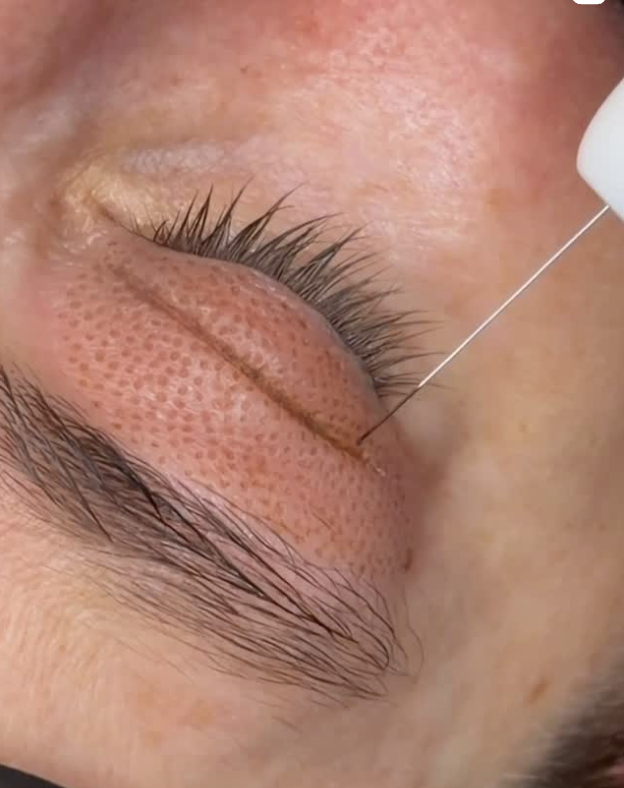
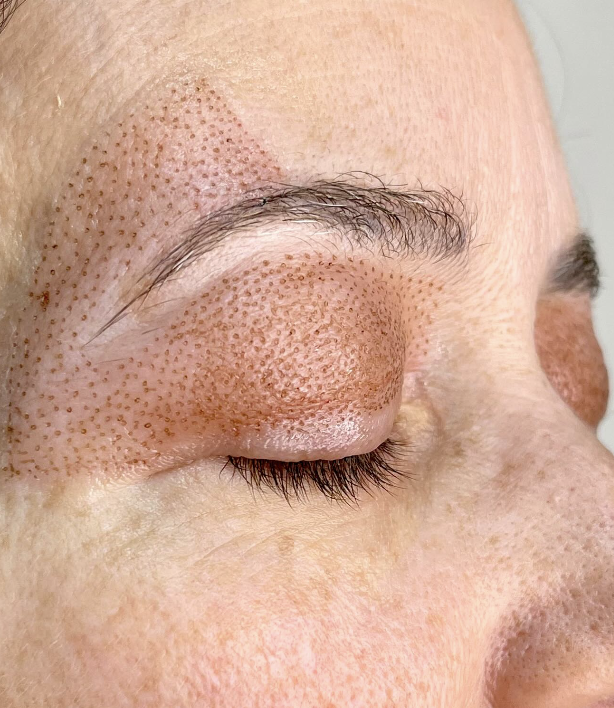
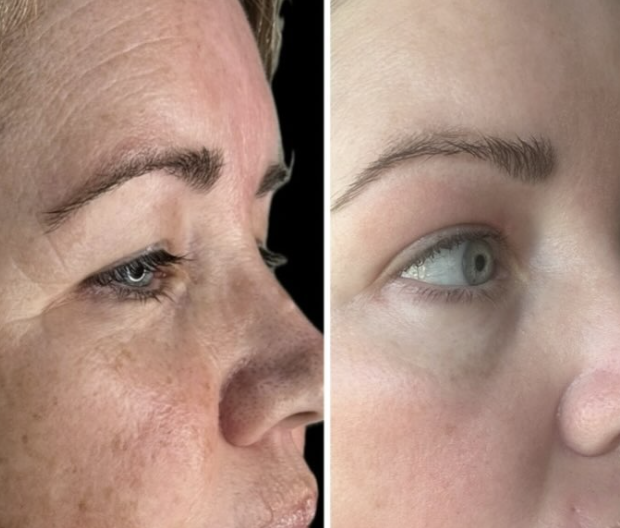
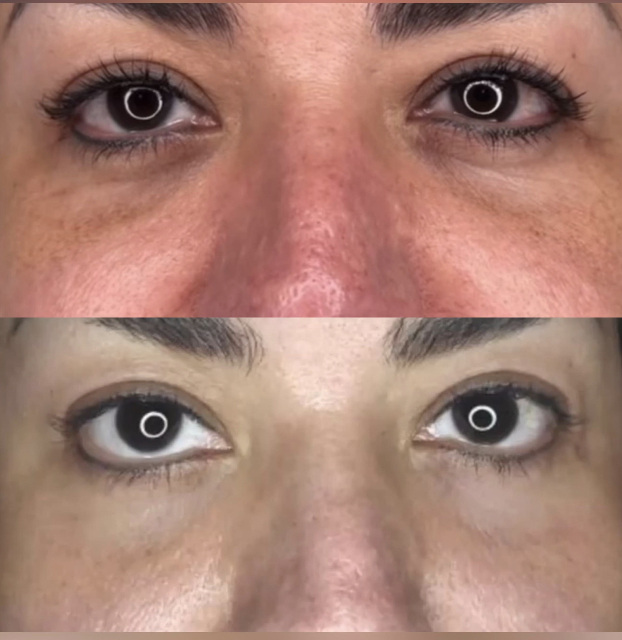
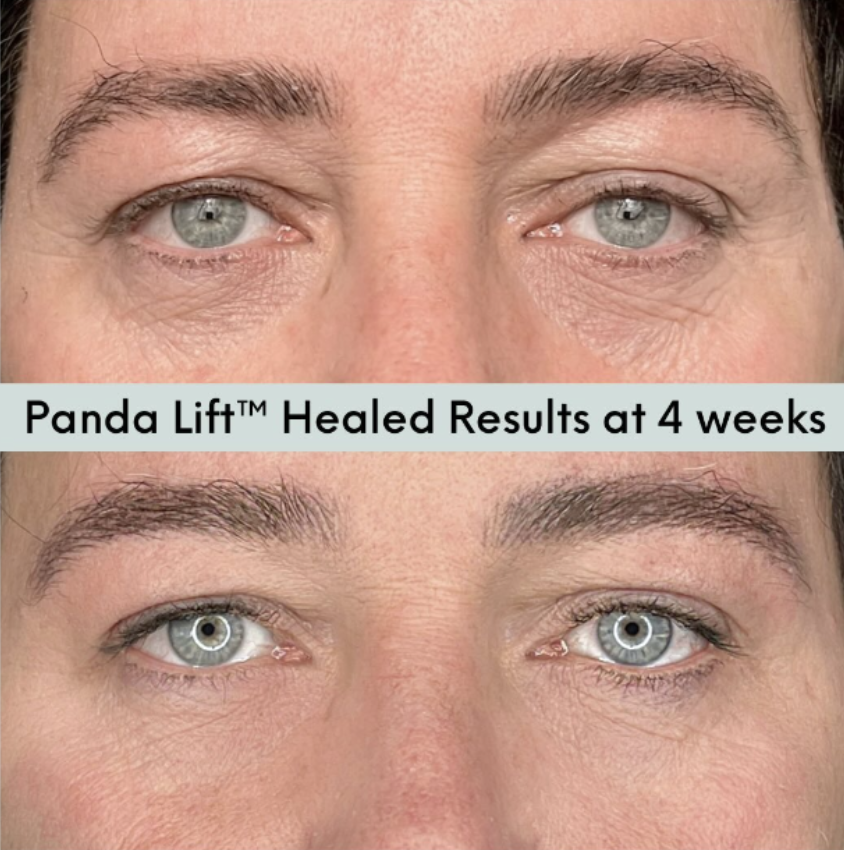
A genuine HITECH SKIN Plasma Fibroblast result. Individual results vary according to skin quality, laxity, healing response and treatment suitability.
WHAT CAN PLASMA FIBROBLAST REALISTICALLY IMPROVE?
For appropriately selected clients, Plasma Fibroblast may help soften the appearance of mild to moderate laxity, fine lines and crepey skin around the eyes.
The result should generally be thought of as refinement rather than transformation.
Some clients choose it because they are not ready for surgery, do not require a surgical correction or prefer a treatment that works gradually with their existing skin.
However, individual outcomes vary. Age, skin quality, degree of laxity, pigmentation risk, healing response and aftercare can all influence the result.
Plasma Fibroblast is not intended to reproduce the amount of tissue removal or structural correction possible with surgery.
PLASMA FIBROBLAST OR BLEPHAROPLASTY: THE KEY DIFFERENCES
Plasma Fibroblast is a non-surgical treatment performed on the skin’s surface. Blepharoplasty is an operation that can remove skin and address deeper eyelid tissue.
Plasma Fibroblast may suit someone seeking a more conservative improvement in skin firmness and texture. Surgery may be more appropriate when excess skin or fat requires physical removal.
Following Plasma Fibroblast, swelling is commonly most noticeable during the first few days—particularly around the eyes. Small carbon crust dots generally remain visible for approximately 7–10 days and must be allowed to dry and shed naturally.
Surgical recovery varies according to the procedure and the individual. It may involve bruising, swelling, wound care, activity restrictions and follow-up with the treating surgeon.
Neither option should be selected solely because one appears easier. The right choice depends on your anatomy, concerns, expectations, medical suitability and the degree of correction you are hoping to achieve.
WHO MAY SUIT A NON-SURGICAL APPROACH?
Plasma Fibroblast may be considered for someone who:
• Has mild to moderate eyelid or surrounding skin laxity
• Is concerned by fine lines or crepey skin
• Understands that results develop gradually
• Wants refinement rather than surgical-level correction
• Is willing and able to follow the complete aftercare protocol
• Has been assessed as suitable following consultation
Not every skin type or concern is appropriate for Plasma Fibroblast. Pigmentation risk must be carefully considered, and some clients will be advised against treatment.
WHEN SHOULD SURGICAL ADVICE BE CONSIDERED?
A consultation with a qualified medical specialist may be the more appropriate starting point when:
• Eyelid skin is significantly overhanging
• Vision may be affected
• Lower-eye bags are caused by prominent fat pads
• There is substantial tissue laxity
• A more dramatic or predictable structural correction is desired
• There are medical or functional concerns involving the eyelids
Recommending the right pathway is more important than recommending a particular treatment.
WHAT RECOVERY LOOKS LIKE AFTER PLASMA FIBROBLAST
The eye area can swell considerably because the surrounding tissue is delicate. Swelling is generally most noticeable during the first 2–3 days and may be greater upon waking.
Small carbon crust dots remain visible while the treated skin heals. These must not be picked, rubbed or prematurely removed.
Clients are generally advised to:
• Follow their personalised aftercare instructions
• Keep the treatment area dry as directed
• Avoid picking or scratching the carbon crusts
• Sleep with the head elevated during the initial swelling period
• Avoid applying unapproved products to the healing skin
• Protect the area carefully from sun exposure once the dots have shed
• Contact the clinic if anything feels unusual or concerning
Pinkness may remain after the dots have released, and the skin continues settling beneath the surface.
WHEN WILL THE FINAL RESULT BE VISIBLE?
Plasma Fibroblast results are not judged when the carbon crusts first disappear.
Although an early contraction may be visible, collagen remodelling develops progressively over the following weeks. The treated area should be allowed approximately 6–12 weeks before the result is properly assessed.
Some clients may require more than one treatment, while others may be better suited to an alternative pathway. This can only be determined through individual assessment and review.
THE IMPORTANCE OF REALISTIC EXPECTATIONS
The most successful treatment plan begins with clarity about what each option can—and cannot—achieve.
Plasma Fibroblast may create a visible softening of laxity and improvement in skin firmness around the eyes. It cannot remove large amounts of excess skin, reposition fat pads or guarantee a surgical-level outcome.
Blepharoplasty can create a more substantial structural change, but it is surgery and requires assessment by an appropriately qualified medical professional.
Neither treatment is automatically “better.” The appropriate option is the one that matches your anatomy, desired outcome, tolerance for recovery and medical suitability.
CHOOSING THE RIGHT EYE-TREATMENT PATHWAY
At HITECH SKIN in Armadale, every Plasma Fibroblast treatment begins with an individual consultation.
Linda will assess your skin quality, degree of laxity, pigmentation risk, medical history, expectations and ability to follow the required aftercare. If Plasma Fibroblast is unlikely to provide an appropriate or worthwhile result, that will be discussed honestly.
If your concern requires surgical assessment, you will be encouraged to seek advice from a suitably qualified medical specialist.
The purpose of your consultation is not to persuade you into treatment. It is to help determine the safest and most appropriate pathway for your individual concern.
BOOK YOUR PLASMA FIBROBLAST CONSULTATION
If you are considering treatment around the upper or lower eyes, begin with an individual assessment at HITECH SKIN in Armadale, Melbourne.
This article provides general information only and does not replace individual medical advice or assessment by an appropriately qualified medical professional.