Plasma Fibroblast Aftercare: Your Day-by-Day Healing Guide
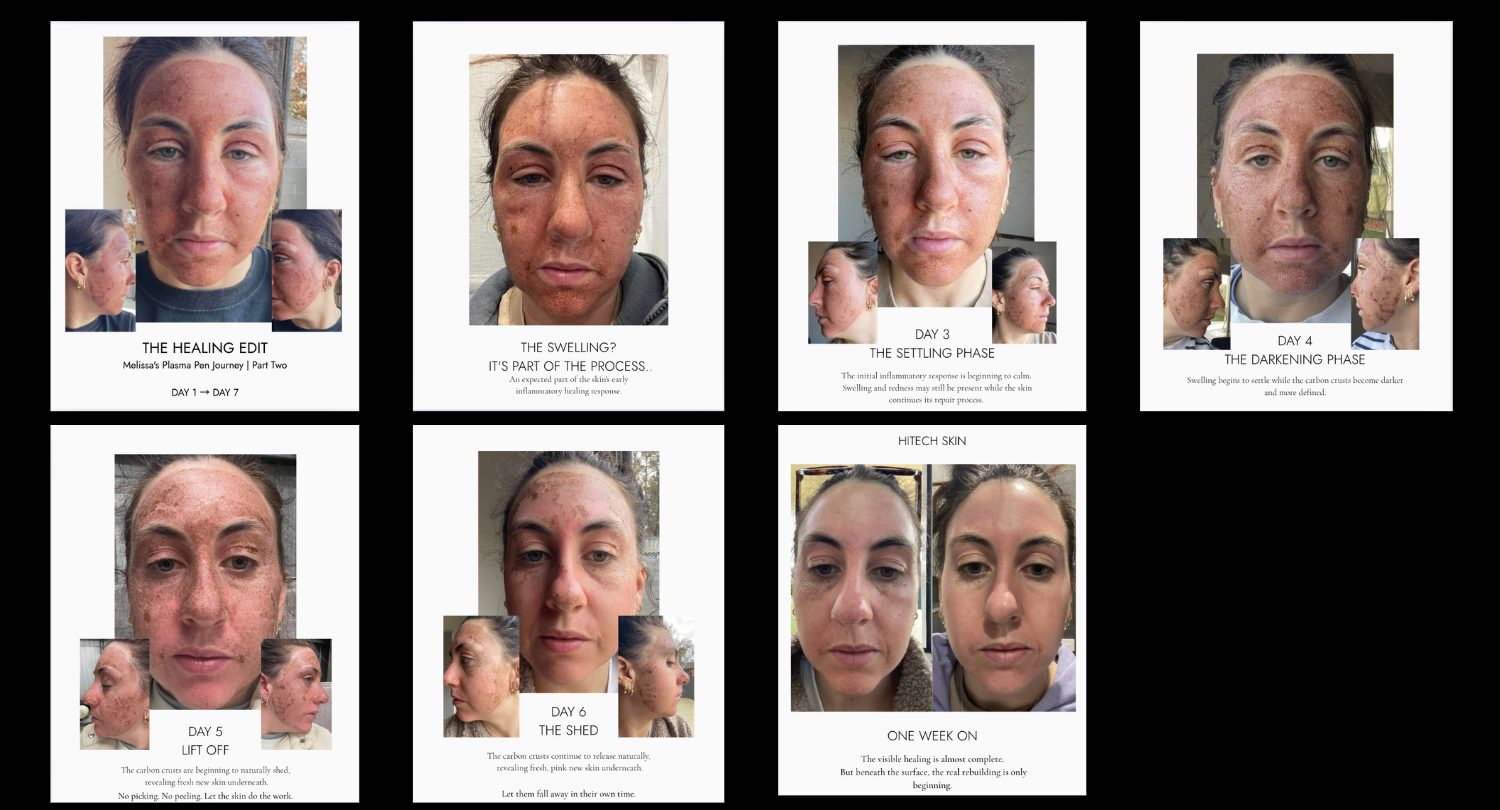
Plasma Fibroblast full-face healing progression from treatment day through to one week after treatment.
Plasma Fibroblast creates controlled micro-thermal points on the skin’s surface, so the healing period is an important part of the treatment—not something that happens after the “real” work is finished.
Knowing what to expect can make the recovery feel far less daunting. While every client heals differently, this guide explains the typical stages following treatment and how to care for your skin throughout the process.
YOUR INDIVIDUAL AFTERCARE PLAN
The following timeline is a general guide. Your treatment area, skin response and prescribed products may alter the instructions you receive.
At HITECH SKIN, you will be provided with personalised aftercare instructions and the products required for your initial recovery. Always follow the directions given specifically to you, even if they differ from general information you have read elsewhere.
TREATMENT DAY: IMMEDIATELY AFTERWARD
Directly after treatment, the area may feel warm, tight or mildly tender. Redness will be visible, along with the small carbon crust dots created at each treatment point.
For the remainder of the day:
• Avoid touching the area unnecessarily
• Apply only the products recommended by HITECH SKIN
• Keep the area clean and allow it to dry-heal
• Use a clean, cool compress if instructed—never place ice directly onto the skin
• Avoid makeup, active skincare and fragranced products
• Sleep with your head slightly elevated, particularly after eyelid treatment
A thin application of your recommended soothing product may be used according to the instructions provided at your appointment.
DAYS 1–3: SWELLING AND REDNESS
Swelling, warmth, redness and a feeling of tightness are expected during the first few days.
Swelling can be more noticeable following upper or lower eyelid treatment and may appear greater the morning after your appointment. This does not necessarily mean anything is wrong.
Continue to:
• Keep the treated area clean
• Avoid rubbing, scratching or pressing on the skin
• Use only your recommended post-procedure products
• Sleep with your head elevated
• Avoid strenuous exercise, excessive heat, saunas, steam rooms and swimming
• Keep the area protected from direct sunlight
Do not apply makeup over fresh treatment dots.
DAYS 3–7: THE CARBON CRUST STAGE
The small carbon dots will become drier and may feel slightly rough or itchy as the skin heals beneath them.
This is the stage when patience matters most.
Do not pick, rub, exfoliate or attempt to remove the dots. Premature removal can interrupt healing and increase the risk of prolonged redness, pigmentation changes or scarring.
Allow every dot to loosen and fall away naturally.
Continue avoiding:
• Scrubs, exfoliating acids and retinoids
• Facial brushes and cleansing devices
• Makeup directly over the dots
• Swimming pools, spas, saunas and excessive sweating
• Towels, pillowcases or clothing rubbing against the area
• Direct sun exposure
Fresh pillowcases and careful hand hygiene are strongly recommended throughout this stage.
DAYS 7–10: THE DOTS BEGIN TO SHED
For many facial areas, the carbon crusts begin to fall away naturally between approximately days five and ten. Eyelid and larger treatment areas can sometimes take longer.
The skin underneath may appear fresh, pink and more sensitive than usual. Do not mistake this new skin for the final result—the area is still healing and remodelling.
Even if most dots have disappeared, do not scrub away the remaining ones.
Makeup and normal skincare should only be resumed once the dots have shed and Linda has confirmed that your skin is ready.
AFTER THE DOTS HAVE SHED
Once the carbon crusts have naturally released, the newly healed skin requires gentle care and diligent sun protection.
At this stage:
• Introduce your prescribed homecare products as directed
• Use a gentle cleanser and avoid unnecessary friction
• Apply broad-spectrum SPF 50+ every day
• Avoid direct sun and wear a hat when outdoors
• Delay strong acids, retinoids, scrubs and other active products until advised
• Do not wax or undertake additional energy-based treatments without approval
Pinkness may remain visible for two to three weeks—and occasionally longer—depending on the treatment intensity, area and individual healing response.
WEEKS 2–4: SETTLING AND SUPPORT
During this stage, the surface of the skin continues to settle while the deeper remodelling response is underway.
Where included in your treatment plan, follow-up appointments may involve LED therapy and a gentle plasma-based skin treatment once the surface has healed appropriately.
These appointments allow Linda to assess your recovery, support the skin and advise when your usual skincare can be safely resumed.
WEEKS 6–12: PROGRESSIVE REMODELLING
Plasma Fibroblast results should not be judged immediately after the dots disappear.
Collagen remodelling develops progressively during the following weeks, with changes in skin firmness and tightness becoming more apparent over time. Your progress appointment provides an opportunity to assess the response and determine whether any further treatment or supportive skin therapy is appropriate.
WHAT IS NORMAL?
Common and expected responses can include:
• Redness and warmth
• Swelling, especially around the eyes
• Tightness or mild tenderness
• Small, dry carbon crust dots
• Mild itching as the skin heals
• Temporary pinkness after the dots shed
• Gradual rather than immediate improvement
WHEN SHOULD I CONTACT THE CLINIC?
Please contact HITECH SKIN if you are uncertain about any part of your recovery. It is always better to ask than to worry or apply an unsuitable product.
Seek prompt advice if you experience:
• Pain, redness, heat or swelling that is becoming worse rather than settling
• Yellow or green discharge
• An unpleasant odour
• Blistering or unexpected breakdown of the skin
• Fever or feeling generally unwell
• Any reaction that concerns you
Linda can assess whether what you are experiencing appears to be part of normal healing or whether you should seek medical review. Possible signs of infection require prompt assessment by a medical practitioner.
THE MOST IMPORTANT AFTERCARE RULES
If you remember nothing else, remember these five things:
Do not pick the carbon crusts.
Use only the products recommended for your recovery.
Keep the area clean and avoid unnecessary heat, friction and moisture.
Protect the newly healed skin carefully from the sun.
Contact HITECH SKIN if you are concerned rather than trying to treat the area yourself.
ONGOING SUPPORT AT HITECH SKIN
Plasma Fibroblast at HITECH SKIN is not treated as a one-off appointment where you are simply sent home and forgotten.
Your treatment pathway includes detailed preparation, prescribed aftercare, follow-up support and progress assessment. Depending on the treatment selected, LED and complementary plasma-based appointments may also form part of your personalised plan.
Considering Plasma Fibroblast in Melbourne?
Begin with a consultation at HITECH SKIN in Armadale to determine whether the treatment is appropriate for your skin, concern and available recovery time.
BOOK YOUR CONSULTATION
https://Appointmenttypes.as.me/Consultations
RELATED READING
Is Plasma Fibroblast Safe? What Melbourne Clients Need to Know
https://www.hitechskin.com.au/hitech-edit-articles/is-plasma-fibroblast-safe-melbourne
This article provides general information only. Your personalised HITECH SKIN aftercare instructions should always take priority, and medical concerns should be assessed by an appropriate healthcare professional.